AI Automation
10 Business Processes Singapore SMEs Can Automate With AI
A practical shortlist of high-volume SME processes that are often strong candidates for AI automation.
28 Aug 20268 min read

Singapore SMEs often do not lack ambition around AI — they lack clarity on where to apply it. The most useful starting point is not a technology trend list. It is the work your team already repeats every week.
Below are ten business processes that commonly create manual load in SME operations. Not every company should automate all ten. Use the list to spot where volume, repetition and clear rules already exist.
1. Data entry across systems
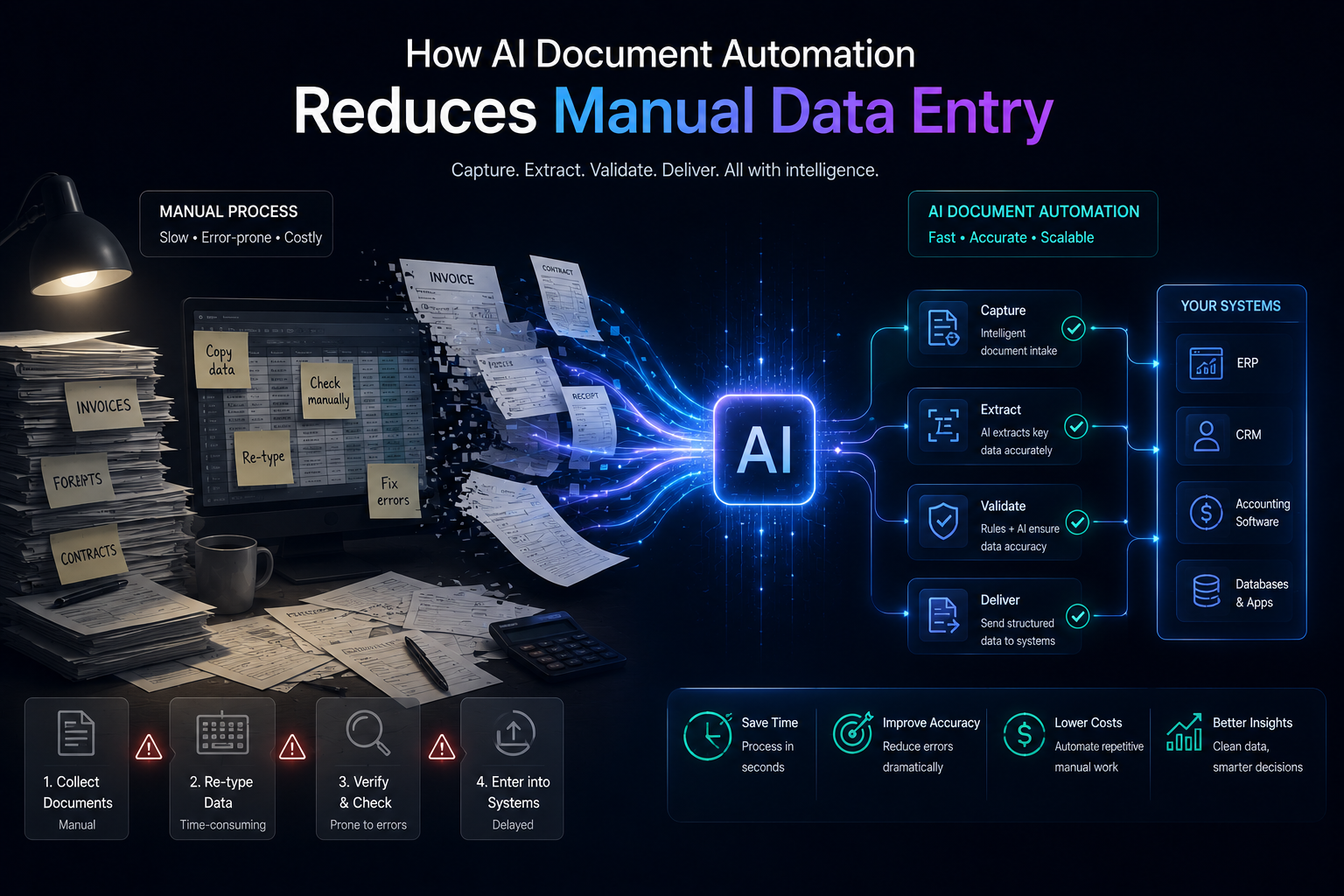
Staff copy information from forms, emails or spreadsheets into CRM, accounting or operations tools. When fields are reasonably structured, automation can capture and route data — with validation before anything is written into live systems.
2. Document processing
Invoices, delivery orders, application packs and contracts arrive as PDFs or scans. AI can classify documents, extract key fields and prepare records for review. This is especially useful when volume is high and templates are somewhat consistent.
3. Customer and supplier enquiries
Teams spend hours answering similar questions about order status, opening hours, product details or policy rules. Automation can draft or route responses using approved knowledge, while escalation paths remain with people for edge cases.
4. Internal knowledge search
SOPs, price lists, HR policies and past project notes often live in shared drives. An AI search layer can help staff find answers faster — provided access controls and source quality are taken seriously.
5. Reporting and status packs
Weekly reporting that stitches Excel tabs, email updates and screenshots is a classic SME drain. Automation can assemble recurring packs from system data, while managers still interpret the story.
6. Approval preparation
Many approvals are delayed not by decision-making, but by incomplete submissions. Automation can check required fields, attach context and route requests to the right person — without removing human sign-off where it matters.
7. Scheduling and reminders
Follow-ups for renewals, inspections, deliveries or collection dates are easy to miss when they live in chat threads. Structured reminders and task creation reduce dropped balls without needing a full AI platform.
8. Lead and request triage
Website forms, WhatsApp messages and email enquiries arrive in different formats. Classification and routing help sales or operations respond faster, especially when volume spikes.
9. Compliance and checklist administration
Recurring checks — document expiry, onboarding packets, vendor paperwork — create administrative overhead. Automation can track completeness and flag missing items before deadlines become urgent.
10. Repetitive back-office administration
File renaming, folder filing, summary notes and handoff messages seem small until they consume hours every week. These tasks are often excellent early wins because the business risk is lower and the time savings are visible.
How to choose among these options
- Favour high volume over novelty.
- Prefer processes with clear rules and measurable outcomes.
- Start where data already exists in documents or systems.
- Keep a human review step for money, compliance or customer-sensitive decisions.
- Avoid starting with the most politically complex cross-department process.
If you are still deciding where to begin, read our SME starting guide or explore CloudFox AI automation services for Singapore businesses.
Share the process your team repeats most often and we can help you assess whether automation is a fit Talk to CloudFox.