SME Guides
AI Automation for Singapore SMEs: Where Should You Start?
A starting guide for Singapore SMEs that want AI automation without boiling the ocean.
26 Aug 20268 min read

Many Singapore SME owners are interested in AI but unsure where to begin. The risk is not missing the trend — it is spending time and budget on a showcase that never changes day-to-day work.
A better starting point is operational: find a high-volume repetitive workflow, prove value on a bounded scope, then expand. This guide explains how to choose that first process.
Start with work your team already repeats
AI is most useful when people perform the same steps often: reading similar documents, entering similar fields, answering similar enquiries, preparing similar reports. Novelty is a weak signal. Frequency and consistency are stronger ones.
A simple filter for first projects
- Happens weekly or daily, not once a quarter
- Follows recognisable rules most of the time
- Creates visible time cost or backlogs
- Can be measured (volume, turnaround, error rate)
- Does not require a full systems replacement to start
Why “adopt AI” is the wrong first goal
Buying a tool without a business case creates shelfware. Teams try a chatbot, a summariser or a generic assistant, then return to Excel and WhatsApp because the real bottleneck was never addressed. Tie every initiative to a process outcome: fewer hours on data entry, faster enquiry handling, cleaner reporting, fewer missed follow-ups.
Good first candidates for SMEs
Document-heavy admin, enquiry triage, reporting packs and approval preparation are common early wins. They usually have enough structure to automate partially, while still allowing human review for exceptions.
For concrete examples, see our list of SME automation use cases.
When digitalisation should come first
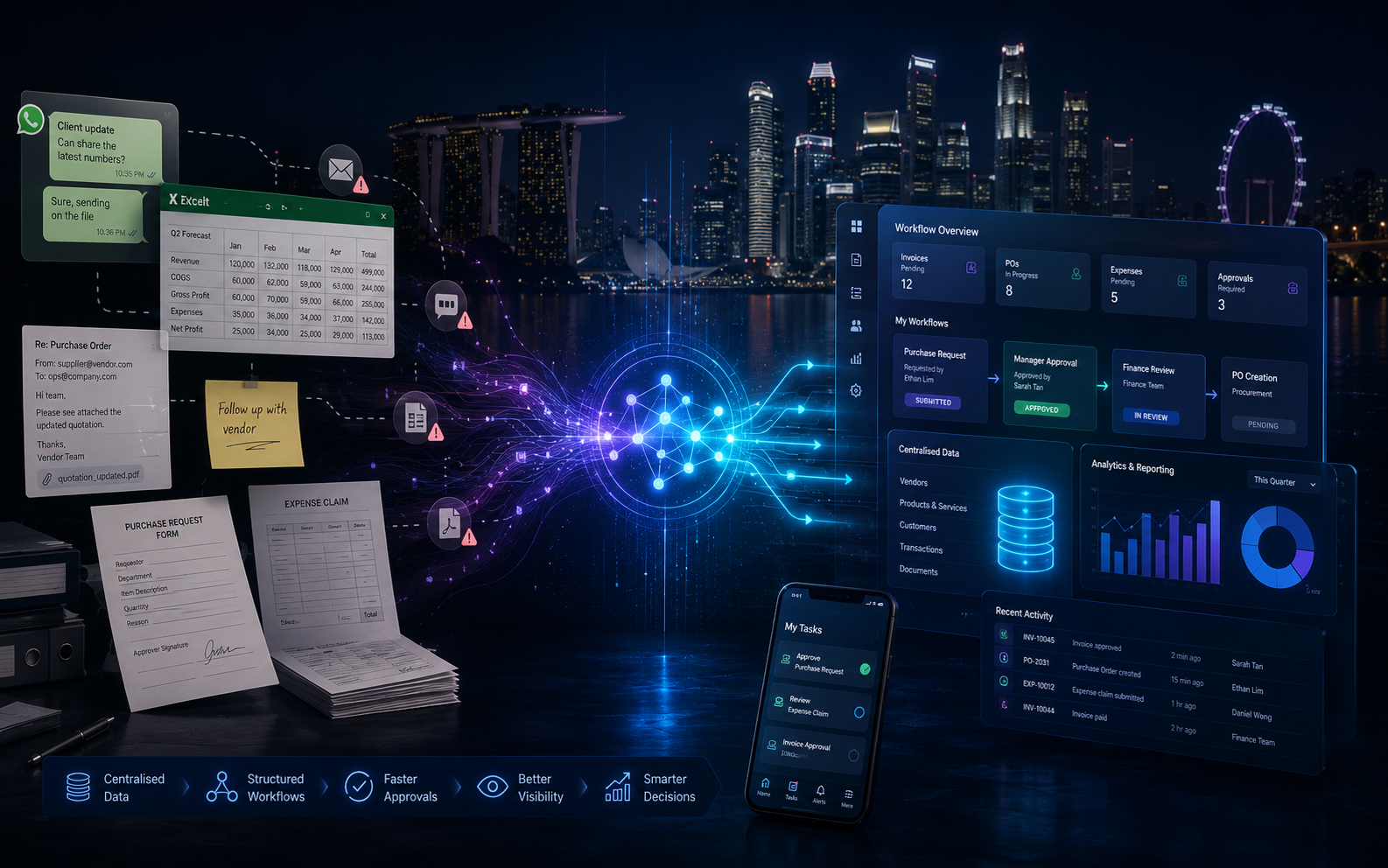
If the process still lives entirely in paper, scattered chat threads and conflicting spreadsheets, automation may amplify chaos. In those cases, structure the workflow first — forms, ownership, a single source of records — then automate. The sequence matters more than the branding of the project.
CloudFox often helps SMEs sequence business digitalisation and AI automation so the first project is both feasible and valuable.
A practical 30-day starting path
- List the top five repetitive tasks by hours spent.
- Pick one with clear rules and measurable volume.
- Map the current steps, systems and exception cases.
- Define what “good” looks like in one sentence.
- Run a bounded pilot with human review still in place.
- Decide to stop, refine or expand based on evidence.
Common mistakes to avoid
- Starting with the most complex cross-department process
- Skipping exception handling and ownership after go-live
- Expecting full automation where judgement is still required
- Ignoring integration with the systems staff already use
- Judging success by demo quality instead of operational impact
What “good enough to start” looks like
You do not need perfect data or a full digital transformation programme. You need one process with enough structure to learn from, sponsorship from the people who own the work, and a willingness to keep humans in the loop where risk is high.
If you want help choosing the first automation candidate for your Singapore SME, describe the workflow your team repeats most Talk to CloudFox.